
THE DEFINITIVE GUIDE TO INSULIN DOSING FOR CARBS, PROTEIN AND FAT
THE DEFINITIVE GUIDE TO INSULIN DOSING FOR CARBS, PROTEIN AND FAT
- Manage your Account
- Start Here
- Guides
- Nutrition
- Training
- Lifestyle & Motivation
- Webinars
- Research Reviews
- Resources
Welcome to the Definitive Guide On
Insulin Dosing For Carbohydrate, Fat, and Protein
I’ve been obsessed with learning how to get the best post possible diabetes control, using the simplest methods, ever since I was diagnosed with Type 1 Diabetes in 2008. But when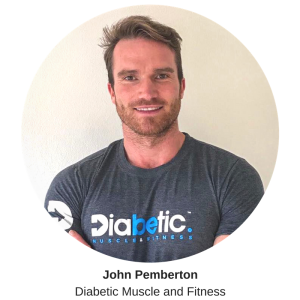 it comes to determining insulin doses at meal times, IT’S NOT THAT SIMPLE.
If you have had the same education as the majority of people with Type 1 Diabetes, you will have been led to believe:
Count the carbohydrate in your meal, apply your insulin to carbohydrate ratio, deliver the insulin and eat, then voila! Your glucose will stay on target.
By now you know this is not the case, especially when you eat:
- Meals high in fat and protein such as pizza, full English breakfast, take away food. What happens?
Your glucose rockets up and stays high for a long time, despite counting the carbohydrate accurately and giving the appropriate insulin
- Meals high in protein and low in carbohydrates such as chicken salad, two chicken breasts with vegetables, and beef chili with salad.
What happens?
Your glucose rises slowly and steadily over the next eight hours, despite counting the carbohydrate accurately and giving the appropriate insulin
- Snacks that are carbohydrate only such as fruit.
What happens?
You go hypoglycemic in two hours, despite counting the carbohydrate accurately and giving the appropriate insulin
I know this all too well because I have experienced each of these situations many times personally, and seen them cause issues daily in my clinical practice.
Why does this happen, and more importantly, how do you manage this?
These are the questions I set myself nearly ten years ago. I am proud to say you will discover all the answers within this course. In pursuit of the answers, I exhausted the research literature, contacted the best diabetes teams across the globe, and experimented both personally and with the people I see in clinical practice.
In a nutshell, ALL THE MACRONUTRIENTS, carbohydrate, fat and protein, require insulin so they can be metabolized effectively by the person with type 1 diabetes. The challenge is that individually they all require different amounts of insulin on a gram by gram basis. To add to the confusion, the amount of insulin they require changes when you combine them in normal meals!
This course is truly unique in that it systematically walks you through the insulin requirements for the macronutrients individually, and when they are combined. The course helps you evaluate all the current insulin dosing approaches such as carbohydrate counting, fat and protein unit counting, and the food insulin index. You will see they all have good points but also have obvious limitations.
The course will equip you with the skills and simple equations that you can apply at meal times. This will make accurate insulin dosing easy for you.
Ultimately this course will teach you how to be flexible with your insulin dosing strategy, so you can choose any diet type you like, and still achieve fantastic diabetes control.
All of my personal and clinical experience has taught me every great course has three key elements:
- Engagement
- Education
- Empowerment
I have taken my thousands of hours of hard work and condensed it into:
- A summary document that gives you the key highlights.
- Eleven detailed chapters that allow you to explore deeper.
- A calculator that incorporates all the equation discussed in the documents.
I guarantee you will be engaged, educated and empowered. I have only one ask, be an active learner. Learning is a participation sport!
So,
- Read the summary document first.
- Go deeper into the sections that you want to know more about.
- Try the calculator to apply your learning.
- Use what you learn in REAL LIFE.
Ready to move past carbohydrate counting?
Let’s go!
John Pemberton
Diabetes Specialist Dietitian PGDip, RD
Sports, Health, Exercise and Nutrition BSc